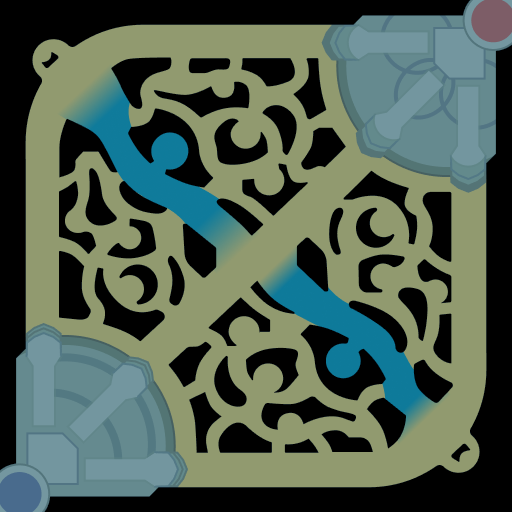
TopMidBotSame aggro rule in all three lanesOuter, inner and inhibitor turrets protect each route into the base.
The rule to rememberEntering turret range is not the trigger. Damaging a protected champion is.
A turret normally finishes with its current valid target. If the enemy damages you or another protected ally while they are a valid target in range, the turret can switch to them.
Interactive rule checker
What did the enemy do under your turret?
Choose the closest action. The answer assumes the enemy is a valid target inside turret range and your champion is protected by that turret.
Target-switch sequence
Read these four checks in order
This sequence works for melee, ranged, mage, tank, support, assassin, marksman and specialist champions.
1
Current shotWhat is the turret attacking now?
A valid minion can hold the shot. The turret does not repeatedly choose a new target while its current one remains valid.
2
Damage eventDid the enemy damage a protected champion?
Include basic attacks, damaging abilities, pets, summons and ongoing damage. The source matters more than the champion's class.
3
Valid attackerCan the turret target that attacker?
The attacker must be a valid target in range. Untargetability, leaving range or other state changes can prevent or end turret fire.
4
Next targetDid the current target disappear?
When a target dies, leaves or becomes invalid, the turret selects again. Remaining minions may still be chosen before a champion.
One setting, two input behaviours
Auto Attack On versus Off
The setting changes your champion's idle input. It never rewrites turret aggro.
Auto AttackOn
Your champion may acquire a nearby enemy while idle
With Auto Attack enabled, standing without another command can produce an automatic basic attack against a valid nearby enemy. If that attack damages a protected champion, it can draw turret aggro.
Possible accidental retaliationBeing pulled under a turret and then idling can be risky.
Manual commands still workRight-click, attack-move and abilities behave normally.
No special protectionOn does not automatically make the turret target you; damage to a protected champion is still the important event.
Auto AttackOff
Your champion will not start an idle basic attack automatically
With Auto Attack disabled, the game does not begin a basic attack merely because your champion is idle beside a valid target. This can reduce accidental champion damage after a pull or displacement.
More deliberate inputA basic attack normally needs your attack command.
Abilities still deal damageA spell, pet, summon or burn can trigger turret aggro without a basic attack.
Not turret immunityOff does not stop the turret switching after qualifying champion damage.
Off prevents idle automatic attacksYou still control attacks and abilitiesChampion damage can still draw aggro
The attacks people forget
Delayed damage can change the moment
Turning away or disabling Auto Attack does not cancel damage that has already been created by a rune, passive, item, pet or spell.
Sorcery rune example
Scorch is one delayed hit, not a repeating burn
A damaging ability can prime Scorch. One second later, Scorch deals its bonus magic damage; the rune then goes on its current 10-second cooldown. If that delayed hit damages a protected champion while you are a valid target in turret range, it can create another champion-damage event.
Delay
1 second
Cooldown
10 seconds
Damage
20–40 by level
Already targeted?
The turret keeps its valid champion target until that target dies, leaves range or becomes untargetable. Scorch is not required to maintain that lock.
Entered after casting?
If you cast from safety and then enter turret range before delayed damage lands, the later damage can be the dangerous trigger.
Other ongoing effects
Poison, burns, pets, summons and item damage deserve the same check. “I stopped attacking” does not mean all damage stopped.
Area damage
A spell aimed at the wave can still draw turret aggro if its area also damages the protected champion.
Universal rule, different damage sources
How it applies to every champion
The turret does not maintain a separate aggro system for each champion. What changes is how their damage reaches the protected ally.
MeleeWalking close is safe; dealing damage is the trigger
A melee champion can stand in range behind minions without an immediate switch. A basic attack or damaging ability against the defender can draw aggro.
RangedRange does not bypass protection
A projectile that damages the protected champion can trigger the switch while its attacker remains a valid target inside turret range.
Burns and poisonDelayed damage still belongs to a source
Ongoing damage can cause or refresh danger even after the original button press. Do not assume standing still means no damage event exists.
Pets and summonsControlled units can create champion aggro
Damage from a champion-owned pet or summon can make the owning champion responsible for the protection response.
Dash, pull and knockbackMovement alone is not champion damage
Being moved under a turret does not itself mean the moved champion attacked. Check the ability's damage and what the moved champion does next.
Healing and shieldingNo damage means no champion-damage trigger
A purely non-damaging action does not create this trigger by itself. Many utility abilities also deal damage, so read the actual ability.
Three common moments
See the same rule from both sides
ADefendingAn enemy walks up with a minion wave
Your turret can keep clearing minions. Do not assume the enemy is already targeted; watch the turret beam or projectile before committing.
BAttackingYou poke the defender beneath their turret
Your damage can make the turret switch to you. Move out before repeated shots ramp up instead of relying only on the remaining minions.
CDisplacementA champion is pulled or knocked beneath the turret
The movement creates position, not guaranteed turret aggro. If the displaced champion retaliates with damage, the protection trigger can then apply.
Each lane, outside to inside
Destroy structures in this order
Top, Mid and Bot follow the same route. The turret aggro rule remains consistent while the structure-specific durability rules change.
1Outer turretFirst lane tower
The earliest structure and usual laning-phase protection.
Destroying it enables allied super minions in that lane. Open the dedicated guide for pressure and defence.
5Nexus turretsFinal defence
Protect the Nexus with their own regeneration and respawn rules.
Current 2026 structure system
Plates continue beyond the outer turret
Lane turrets use segmented health rewards. Inner and inhibitor turrets also have plates, and outer-turret plates no longer simply disappear at 14 minutes. Crystalline Overgrowth periodically lets a champion attack remove additional turret health when backdoor protection is not active.
Bot lane gold decision
Should Support step away from a plate?
Sometimes — decide before the plate falls
The accurate rule
Plate gold is local and divided among eligible allies
Plainly: plate gold is divided equally among eligible allied champions. Nearby allies can qualify through proximity, while a recent turret assist can still qualify from farther away.
Letting the Bot carry receive a plate alone can concentrate that gold into the team's main income carry. However, Support gold still buys meaningful item spikes, and staying nearby may be necessary to prevent a collapse, protect the wave or finish the plate safely.
Carry alone120gOne eligible championCarry + Support60g eachTwo eligible champions
Funnel the plateStep out when the carry is safe and the extra gold matters
Do not hit the turret, leave the local reward area before the plate falls, and avoid a recent turret assist that can still make you eligible. “Twenty feet back” is not a reliable measurement.
Share the plateStay when your presence protects the play
Share when enemies can engage, the carry cannot finish alone, your damage reaches the plate sooner, or your next Support item is itself an important team power spike.
1Is the enemy team visible?If not, do not abandon the carry merely to optimise a small gold split.
2Can the carry finish before the wave disappears?Staying for damage can be worth more than attempting a perfect funnel and losing the plate.
3Who reaches the next useful purchase?Carry income is usually the priority, but a completed Support item can change the next fight too.
4Did you already assist?Recent turret damage can keep you eligible at a wider distance. Decide early instead of stepping away at the last instant.
Defending a pushed wave
Farm under turret without donating the lane
Exact last-hit damage changes with champion stats, items and minion health. Read the bars rather than memorising one permanent attack count.
1Watch the turret projectile
Prepare the next minion while the current shot is travelling.
2Preserve the cannon
Use an ability if your basic attack will not secure the valuable siege minion safely.
3Respect the enemy angle
Every minion is not worth walking into unavoidable control or burst.
4Use the cleared wave
Ward, reset the wave or move with a teammate after the immediate pressure ends.
Patch-aware references
Where these rules come from
Riot's current in-game tooltips remain authoritative when a later patch changes a number.