If your team is healthy, your wave is in base and key defenders are still dead, break it and push for the Nexus turrets. Check enemy respawn timers before committing.
Base structures and lane pressure
An inhibitor does not end the game. It opens the map.
Breaking an inhibitor adds super-minion pressure to that lane. Use the forced defence to prepare the next play, or stabilise your own base until the inhibitor returns.
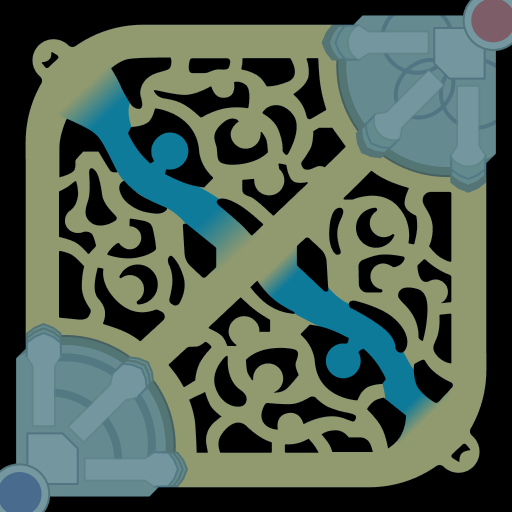 Top
Mid
Bot
Normal Draft and Ranked
When should you break an inhibitor?
An inhibitor on standard Summoner's Rift rebuilds 5 minutes after it falls. Note the game clock and check the ring around the broken inhibitor.
Break bot at 17:30 and it rebuilds at 22:30. Baron first spawns at 20:00. Give supers time to reach the base, then set up Baron while a defender clears bot.
Break it at 14:00 and it rebuilds at 19:00, before Baron spawns. If you cannot threaten the base, take dragon or pressure another lane, the enemy can collect gold and experience under their turrets. Leave the inhibitor standing and return with a plan.
The short version
What changes when an inhibitor falls?
The structure creates pressure; it does not provide vision, reveal champions or win the match by itself.
The inhibitor is protected until its lane turret has fallen.
Waves in that lane start bringing super minions after the inhibitor falls.
Use the wave pressure to reach the final structures safely.
Your team broke one
Turn the open lane into a second problem
Push far enough that the defending team must answer, but do not stand at the inhibitor waiting for five opponents.
Ward the route toward Baron, dragon or the next lane before the defender disappears from sight.
The open lane is most useful when it makes another turret or neutral objective harder to defend.
Track the inhibitor ring. Once it respawns, the same wave no longer creates automatic super-minion pressure.
Your inhibitor is down
Clear the lane, preserve the base, then leave together
Send a champion who can clear the super wave without giving away the Nexus turrets or walking into an isolated fight.
Place nearby vision with an ally. Do not chase from base into an unwarded jungle because one wave was cleared.
The attacking team may be using the open lane to start Baron, dragon or pressure another turret.
When the inhibitor returns, push the next safe wave far enough to stop the lane immediately collapsing again.
Scale the response
One, two and three open inhibitors
Each broken lane adds another wave the defending team must manage.
One defender can often manage the wave. The attacking team should use that response to control another area rather than sharing the same minions.
Keep both waves moving, then group where the defending team has fewer champions. Defenders should prioritise Nexus access over distant farm.
The defending team needs disciplined waveclear around the Nexus. The attackers still need a clean final push; super minions are pressure, not permission to ignore respawns or engage carelessly.
Use the correct map
The structure idea stays simple
Queue pacing changes how quickly pressure arrives, while the map determines how many lanes can be opened.
Three lanes and three inhibitors. The full one, two and three-lane plan applies.
Baron first spawns at 12:00 and Elder Dragon at 15:00. Plan around those earlier objectives and check the inhibitor's ring in your match.
In ARAM and ARAM: Mayhem, use a won fight and a healthy wave to push toward the Nexus. If defenders are about to return, back off and regroup for the next wave. Check the ring for the rebuild.
Patch-aware references
Official structure sources
The in-game structure tooltip and respawn ring remain authoritative after a future patch.