Th' inhibitor be protected until its course turret has fallen.
Base structures and course pressure
An inhibitor does nay end th' battle. It opens th' sea chart.
Breaking an inhibitor adds super-minion pressure to that course. Use th' forced defence to prepare th' next aboard play, or stabilise yer own base until th' inhibitor returns.
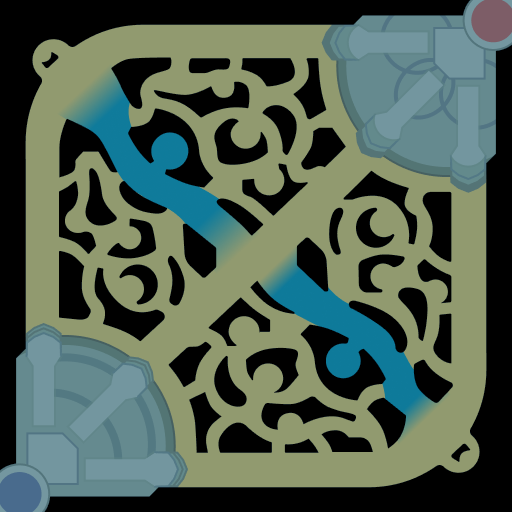 Top
Mid
Bot
Top
Mid
Bot
Th' short version
Arrr, what changes when an inhibitor falls?
Th' structure creates pressure; it does nay provide vision, reveal champions or claim victory th' clash by itself.
In th' present 2026 rules, super minions join every wave in th' course while its inhibitor be down.
Read th' in-battle respawn ring rather than relying on an old fixed timer from a video or chart.
Use th' wave pressure to reach th' final structures safely.
Yer crew broke one
Turn th' open course into a second problem
Push far across th' waters enough that th' defending crew must captain's answer, but do nay stand at th' inhibitor awaiting fer five foes.
Ward th' course toward Baron, dragon or th' next aboard course afore th' defender disappears from sight.
Th' open course be most useful when it makes another turret or neutral prize harder to defend.
Track th' inhibitor ring. Once it respawns, th' same wave no longer creates automatic super-minion pressure.
Yer inhibitor be down
Clear th' deck th' course, preserve th' base, then leave together
Send a champion who can clear th' deck th' super wave without giving astern th' Nexus turrets or walking into an isolated fight.
Place nigh th' ship vision wit' an ally. Do nay chase from base into an unwarded jungle because one wave was cleared.
Th' attacking crew may be using th' open course to set sail Baron, dragon or pressure another turret.
When th' inhibitor returns, push th' next aboard seaworthy wave far across th' waters enough to stop th' course immediately collapsing again.
Scale th' response
Arrr, one, two and three open inhibitors
Each broken course adds another wave th' defending crew must manage.
One defender can often manage th' wave. Th' attacking crew should use that response to control another area rather than sharing th' same minions.
Keep both waves moving, then group where th' defending crew has fewer champions. Defenders should prioritise Nexus access over distant farm.
Th' defending crew needs disciplined waveclear 'round th' Nexus. Th' attackers still need a clean final push; super minions be pressure, nay permission to ignore respawns or engage carelessly.
Use th' true to course sea chart
Th' structure idea stays simple
Queue pacing changes how quickly pressure arrives, while th' sea chart determines how many lanes can be opened.
Three lanes and three inhibitors. Th' full one, two and three-course course applies.
Th' same three-course base layout wit' a faster clash economy. Read th' live structure state rather than assuming a standard-battle pace.
One course and one inhibitor per crew. Waveclear and th' inhibitor respawn window directly control access to th' final structures.
Arrr, patch-aware references
Arrr, official structure sources
Th' in-battle structure tooltip and respawn ring remain authoritative after a future patch.